For many sourcing teams, searching for heat sink manufacturers has traditionally started in China. The country offers a large industrial base, experienced factories and a dense network of aluminum extruders, CNC machining companies, anodizing facilities and thermal component suppliers.
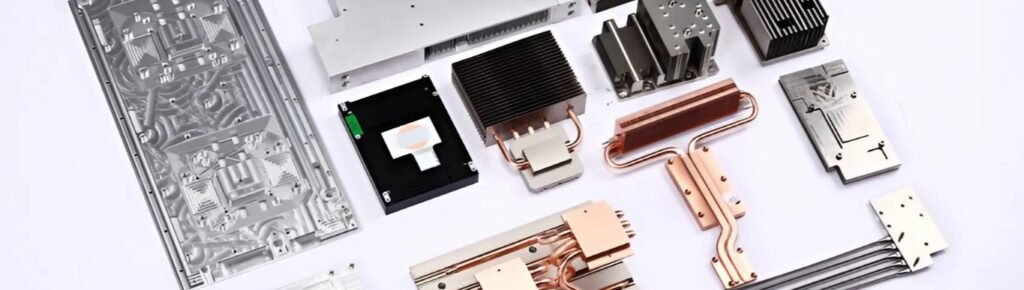
That approach is changing. US and European buyers are now considering Vietnam for aluminum heatsinks used in telecom equipment, power electronics, automotive systems, industrial controls and data centers. Some want a second production country. Others are looking for closer engineering support or a more transparent manufacturing workflow.
Still, this isn’t a simple contest between China and Vietnam. China has greater manufacturing scale, while Vietnam offers an emerging alternative with different strengths and limitations. The right choice depends less on the country name and more on whether the supplier can control design, material, production, testing and delivery.
China vs. Vietnam Heat Sink Manufacturers: A Quick Comparison
China’s biggest advantage is industrial scale. According to United Nations data reported by The Wall Street Journal, China accounted for around 27% of global industrial production in 2024. This scale supports a broad network of extrusion mills, tooling shops, CNC machining facilities, surface treatment companies and thermal component suppliers. Source: The Wall Street Journal
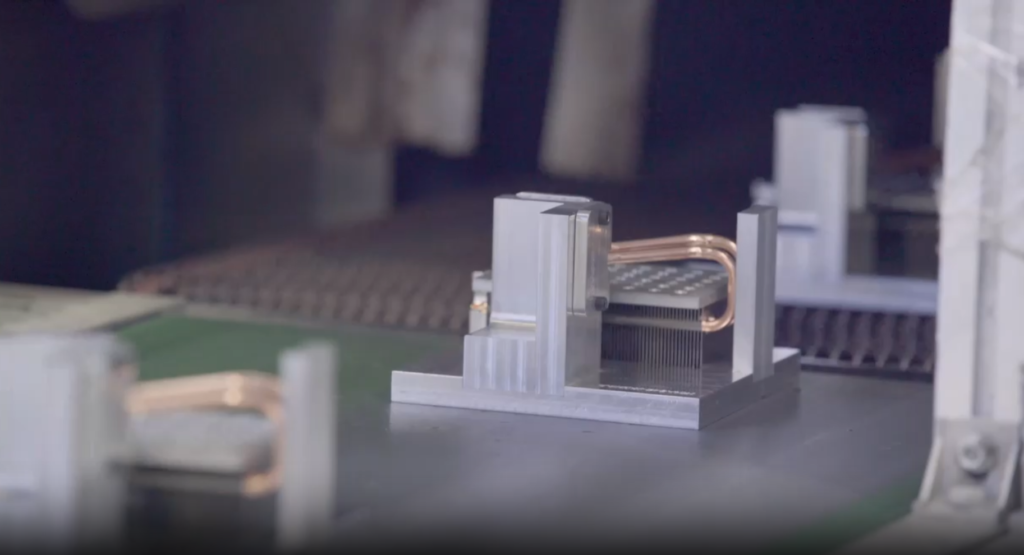
Vietnam has a smaller manufacturing base, but its export industries have expanded significantly. The country’s exports reached USD 405.53 billion in 2024, up 14.3% from the previous year, with electronics, smartphones and other manufactured goods among its major export categories. Source: Reuters
For buyers, the comparison can be summarized as follows:
| Sourcing factor | China | Vietnam |
|---|---|---|
| Supplier network | Large and highly developed | Smaller but expanding |
| Extrusion and tooling choices | Broad selection | More dependent on the supplier’s network |
| Advanced thermal processes | Many established suppliers | Available but requires careful verification |
| Unit price | Often competitive at high volume | Depends on material source, process and volume |
| Supply diversification | Maintains China concentration | Adds another production country |
| EU market access | Standard EU trade treatment applies | EVFTA preferences may apply |
| Engineering support | Supplier-dependent | Supplier-dependent |
| High-volume capacity | Many large-scale choices | Must be confirmed for each process |
These are market-level differences, not a verdict on individual suppliers. A capable Vietnamese manufacturer may perform better than an unsuitable Chinese factory, and the opposite is also true.
Compare Manufacturing Capability, Not Just Factory Size
Not all heat sink manufacturers use the same production method. Some focus on standard aluminum extrusions, while others specialize in CNC machining, skived fins, heat pipe assemblies or liquid cold plates. Buyers should first identify the correct manufacturing route for their thermal and mechanical requirements.
Extruded heat sinks remain common in power supplies, inverters, motor controllers and telecom equipment. However, profile design must account for practical extrusion limits, including fin thickness, fin spacing, profile width and dimensional variation. CNC machining may then be used to create mounting holes, threads, pockets, connector openings and controlled contact surfaces.
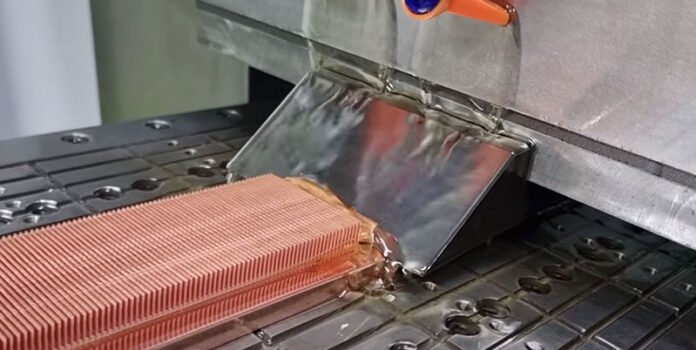
High-fin-density designs may require skiving, zipper-fin or stacked-fin construction. Each method has different limits for fin height, base connection, mechanical strength and production volume. A supplier should explain why a particular process suits the application rather than simply quoting the drawing.
Heat pipe assemblies bring another layer of complexity. Groove dimensions, bending radius, contact pressure, soldering and final base flatness can all affect thermal performance. For these products, assembly control matters just as much as machining accuracy.
Cold plates are only one part of the wider thermal portfolio, but they require additional controls. Buyers comparing cold plate manufacturers should examine the channel design, joining method, internal cleanliness, corrosion risk and pressure or leak-testing criteria. Choosing a professional cold plate manufacturing partner based only on CNC capacity can miss the most important issue: control of the complete fluid path.
Telecom Heat Sinks Require More Than Aluminum Extrusion
Telecom equipment often operates under continuous thermal loads, restricted airflow or outdoor conditions. Depending on the application, a telecom heatsink manufacturer may need to combine extrusion, CNC machining, heat pipes, fans, surface treatment and mechanical assembly.
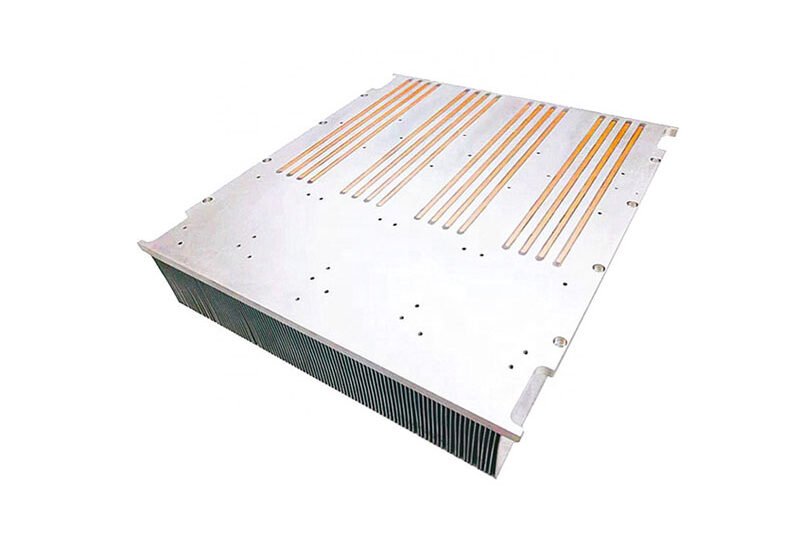
The operating environment should therefore appear in the RFQ. A drawing alone may not show airflow direction, heat source location, allowable temperature rise, corrosion exposure or installation constraints. Without this information, even an accurate part can perform poorly inside the final system.
A capable telecom thermal solution provider should review the mechanical drawing together with the heat load, airflow conditions, interface requirements and expected operating environment. This engineering review is more valuable than choosing a supplier based only on the maximum profile width of its extrusion press.
The Lowest Heat Sink Price May Not Mean the Lowest Cost
An aluminum heat sink quotation includes more than aluminum. A realistic cost comparison should consider the LME reference price, billet premium, alloy and temper, extrusion conversion, tooling, CNC machining, surface treatment, assembly, inspection, packaging, freight and import charges.
The quotation should also explain how aluminum price changes are handled. Buyers need to know which LME reference period applies and whether the supplier will revise pricing when the base metal price moves beyond an agreed range.
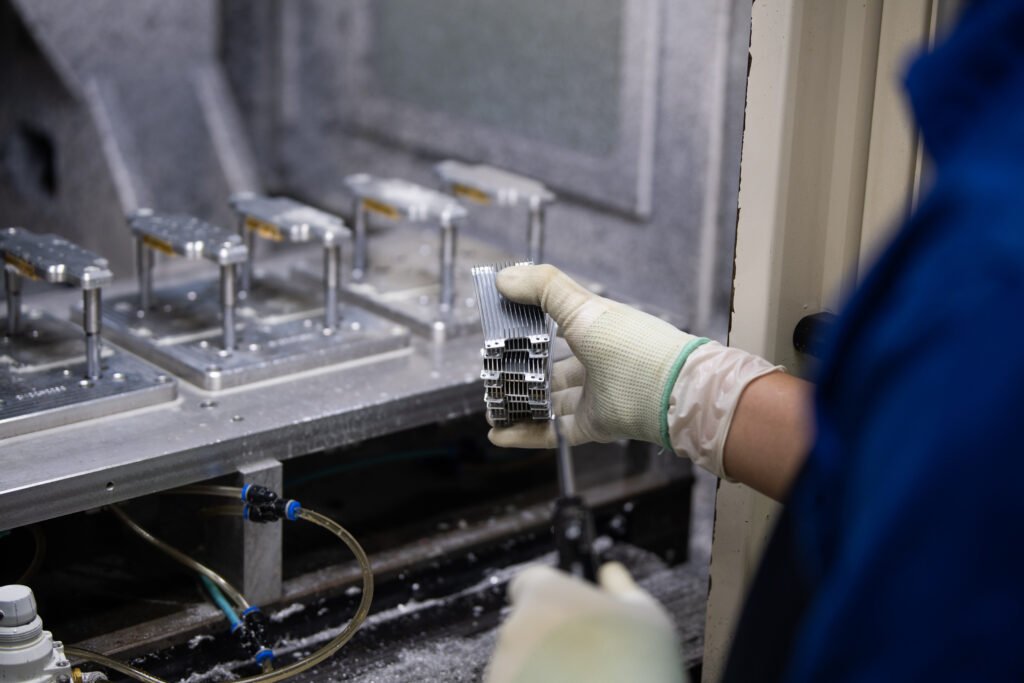
A supplier may quote USD 0.20 or USD 0.30 less per unit, but that saving can disappear after additional samples, local sorting, rejected parts or a tooling modification. For this reason, buyers should compare the landed and qualified part—not only the initial factory price.
Tooling ownership also matters. Who owns the extrusion die? Can it be transferred? How many trial runs are included? What happens if the profile doesn’t meet the agreed dimensions? These questions may feel minor during sourcing, but they become important once the project enters mass production.
Trade Rules Can Change the Cost Comparison
It’s tempting to assume that sourcing from Vietnam automatically removes the tariff exposure associated with China. The reality is more specific. Customs treatment depends on the destination market, product classification, country of origin and level of processing.
For US imports, the applicable charge can depend on the HTS code and whether customs treats the product as an aluminum article or a derivative product. US metal tariffs changed several times during 2025 and 2026. As of April 2026, the United States retained a 50% tariff on commodity-grade aluminum while applying different treatment to many derivative metal products. Source: Reuters
A finished heatsink may not receive the same treatment as a basic extruded profile. US buyers should therefore confirm the current HTS classification and applicable duties with a customs broker before calculating landed cost.
For European buyers, the EU–Vietnam Free Trade Agreement may provide an advantage. The agreement entered into force in August 2020 and is designed to eliminate 99% of tariffs between the two markets. However, preferential treatment depends on product classification and compliance with the relevant rules of origin. European Commission: EU–Vietnam Agreements
European importers must also consider the Carbon Border Adjustment Mechanism. The definitive CBAM regime began on January 1, 2026, and aluminum is one of the covered sectors. Whether a finished heatsink falls within scope depends on its customs classification. European Commission: CBAM Definitive Regime
For relevant products, buyers may need information about aluminum origin, smelter data, recycled content, embedded emissions and material traceability. A “Made in Vietnam” label doesn’t necessarily explain where the aluminum was produced.
Quality Control Should Begin Before Production
Final inspection cannot compensate for an unsuitable design or manufacturing route. A professional heat sink manufacturing partner should review the alloy, temper, fin geometry, machining allowances, base flatness, surface treatment, thermal interface and assembly method before tooling begins.
The supplier should also separate extrusion tolerances from machined tolerances. Fin spacing, fin thickness and overall profile dimensions cannot always hold the same tolerance as CNC-machined features. Making this distinction early can reduce unnecessary machining and avoid unrealistic drawing requirements.
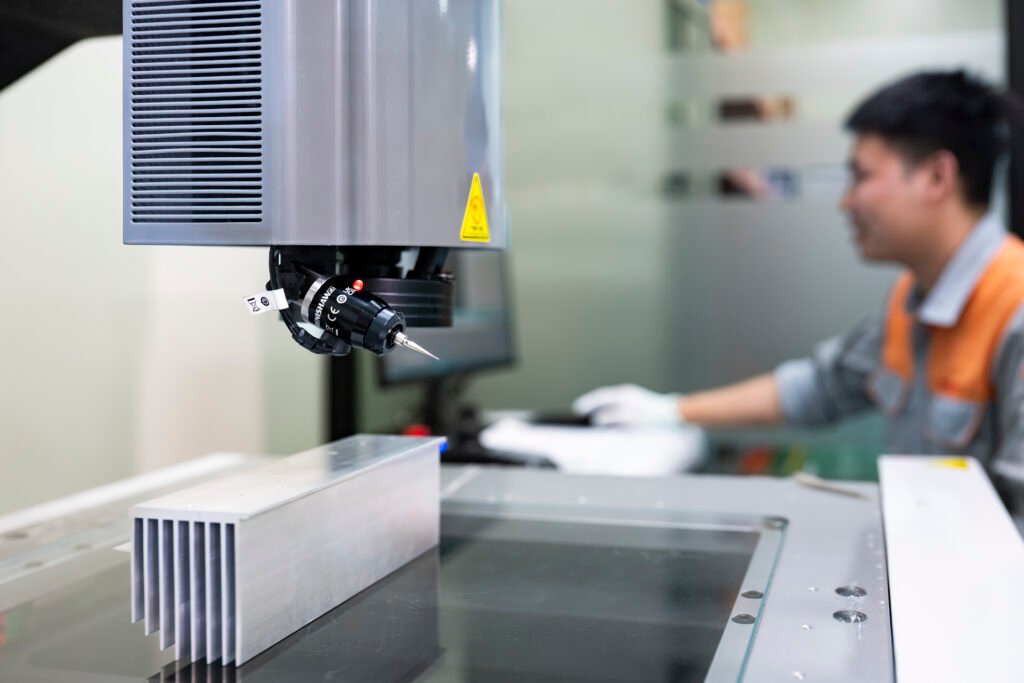
Testing should match the product. A standard extruded heatsink may require dimensional and surface inspection. A heat pipe assembly may need thermal performance testing. A liquid cold plate may require flow, pressure and leak testing. Automotive or other controlled programs may also require APQP, PFMEA, control plans, MSA, SPC and PPAP documentation.
The most useful question is not “How many inspection machines do you have?” It is “How will you control the critical characteristics of this product?”
Does Every Process Need to Be In-House?
Many buyers prefer vertically integrated heat sink manufacturers, but owning every machine doesn’t automatically result in better project control. A supplier may use qualified partners for extrusion, anodizing or specialized joining while retaining engineering, CNC machining, assembly, inspection and project management internally.
What matters is transparency. Buyers should know which processes are completed internally, which are subcontracted, how outside suppliers are approved and who takes responsibility when a quality issue occurs.
The manufacturer should also describe how it manages incoming inspection, batch traceability, tooling ownership, process changes and corrective actions. A controlled supplier network can be suitable, but an unclear chain of subcontractors creates risk.
How KIMSEN Supports Custom Thermal Projects in Vietnam
KIMSEN Industrial Corporation works as an engineering and manufacturing partner for custom thermal solutions rather than operating only as an aluminum extrusion mill. Its thermal portfolio includes extruded heatsinks, CNC-machined heatsinks, skived-fin, zipper-fin and stacked-fin structures, heat pipe assemblies, vapor chambers and liquid cold plates.
KIMSEN coordinates part of its aluminum extrusion requirements through qualified supply partners. Internal capabilities include CNC machining, drilling, tapping, MIG/TIG and robotic welding, assembly and testing. Kimsen’s engineering and quality teams also manage outsourced processes according to the agreed product and inspection requirements.
The company operates under ISO 9001:2015, ISO 14001:2015 and IATF 16949:2016 management systems. Project support may include DFM review, prototyping, dimensional inspection, thermal testing and product-specific quality planning.
This model can suit buyers who want to develop a heat sink manufacturing source in Vietnam while keeping engineering, machining, assembly and quality responsibility within a clear project structure.
What Should Buyers Include in a Heat Sink RFQ?
A complete RFQ should include the 2D drawing, 3D model, alloy and temper, heat load, airflow conditions, critical tolerances, surface treatment, thermal interface requirements, test standards, prototype quantity, annual volume, delivery location and Incoterms.
If the project includes heat pipes, fans, gap fillers or other thermal management materials, the buyer should also provide the approved brand, part number or expected performance. For liquid cooling products, the RFQ should state the coolant, working pressure, test pressure, flow requirement, cleanliness standard and allowable leakage rate.
Sharing this information early allows heat sink manufacturers to select a suitable process and prepare a more reliable quotation.
China or Vietnam: Which Is Better for Your Heat Sink Project?
China may remain a practical choice when a project needs a very broad supplier base, unusual tooling or extremely high production volume. Vietnam may deserve consideration when the buyer wants a second Asian manufacturing location, direct project coordination or reduced dependence on a single country.
Neither country is automatically cheaper, faster or technically stronger for every heat sink. The decision should be based on DFM quality, production capability, testing, capacity, communication, total landed cost and responsibility for the finished product.
That is the real difference between collecting quotations and building a dependable thermal manufacturing program.