A cold plate can look straightforward on a drawing: a metal plate, a flow path, two ports. Yet small choices inside that plate can affect cooling performance, pressure drop, assembly, and cost. That’s why choosing a cold plate manufacturer takes more than comparing unit prices.
For buyers in the US and Europe sourcing a custom part, the useful question is: Can this supplier turn our operating requirements into a part we can test, approve, and produce consistently? Here’s how to find out.
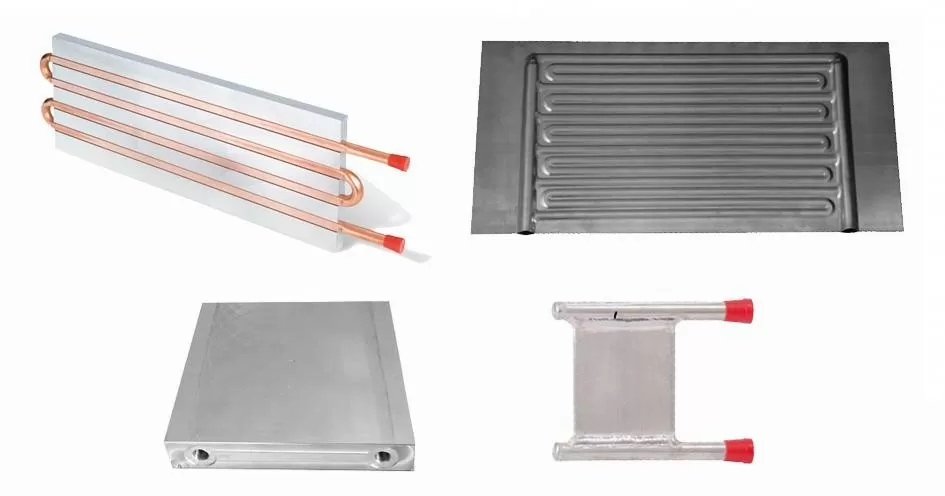
Types Of Liquid Cold Plate
Start with the operating conditions, not the plate dimensions
A drawing tells a manufacturer what the part looks like. It may not explain what the part must do.
Before discussing production, share the heat load, heat source locations, allowable component temperature, coolant type, inlet temperature, target flow rate, and maximum pressure drop. Add the space available for the plate, mounting method, port requirements, and expected annual volume.
These details help the supplier assess the whole cooling problem. A narrow internal channel, for example, may improve heat transfer near a hot spot but also increase pressure drop. Thermal performance and flow performance need to be considered together.
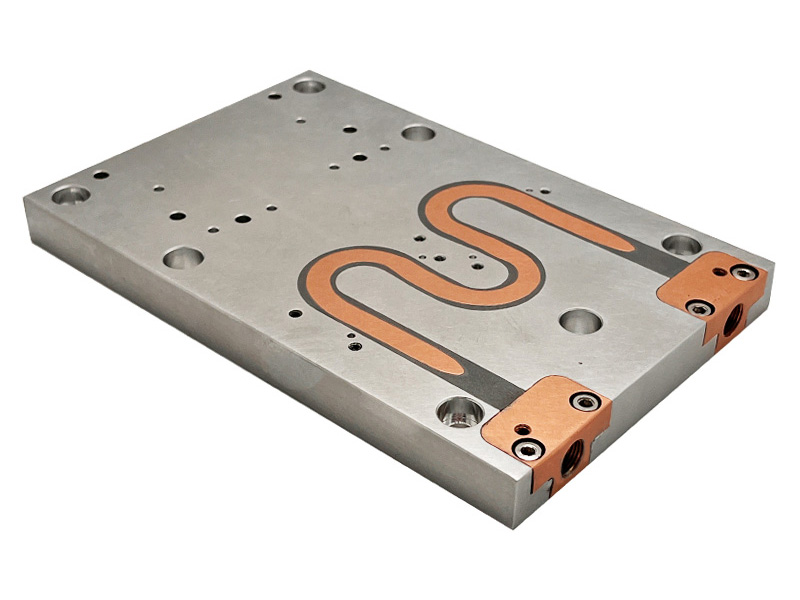
Copper Pipe Water Cooling Plates
If some values are still undecided, say so. An early estimate is more useful than a precise-looking specification that no one has validated.
Ask why they recommend a particular construction
There is no single manufacturing method for every liquid cold plate. Depending on the application, a supplier may propose an embedded tube, machined flow paths, or a joined plate construction. Each approach brings different design and production considerations.
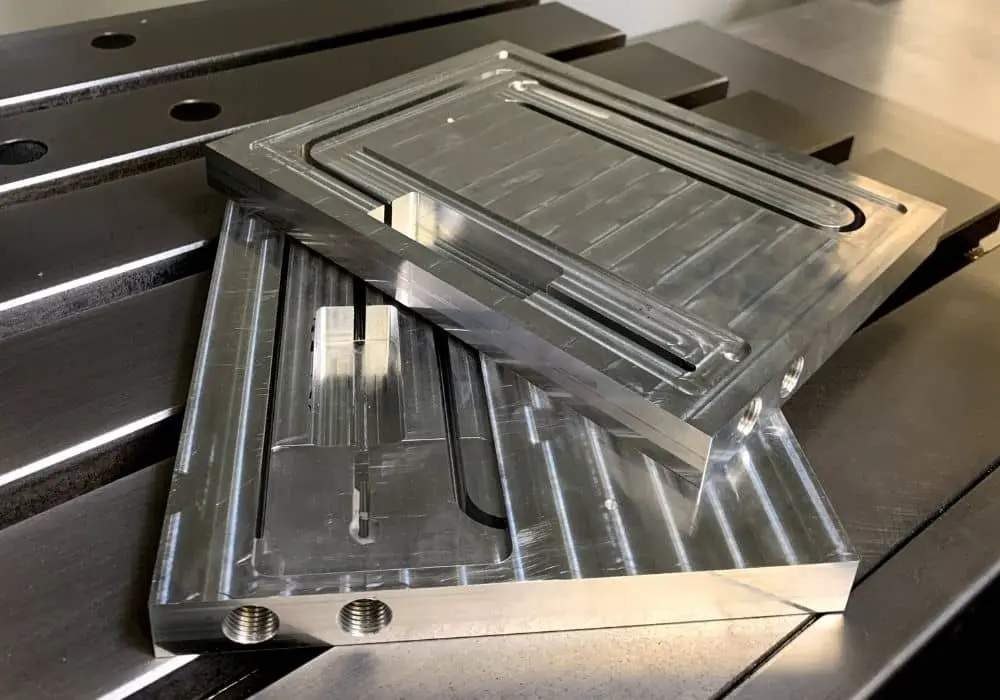
Ask the manufacturer to explain its recommendation against your requirements:
- Where will the coolant flow relative to the main heat sources?
- How will the plate connect to the rest of the cooling loop?
- Which surfaces need flatness or tight dimensional control?
- What joining or sealing steps does the design require?
- How will the internal passages be cleaned and inspected?
You don’t need every process decided before the first conversation. You do need a supplier willing to discuss why a process fits your design. KIMSEN Thermal, for example, presents both pressed-in tube and machined-flow-path cold plate designs on its product page. The right construction for a new project would still depend on its specification and feasibility review. Thermal Solutions
Look closely at design-for-manufacturing support
A prototype that cools well is a promising start. It also needs a practical route into repeat production.
Ask what the manufacturer checks before releasing a drawing: minimum wall thickness, machining access, joining surfaces, port placement, tolerances, and inspection access. If a design change could simplify production, the supplier should be able to explain its effect on thermal performance and cost.
This conversation is especially useful when your engineering and purchasing teams have different questions. Engineering may focus on temperature and pressure drop; purchasing needs to understand tooling, yield, lead time, and what could change the quote. A clear design review gives both teams a shared basis for the decision.
Agree on testing before you compare quotes
“Tested cold plates” can mean different things. One quote might include dimensional inspection and a leak test. Another might also include proof-pressure or thermal performance testing. Ask each supplier exactly what its quotation covers.
Discuss the acceptance method and limits for:
- Critical dimensions and contact-surface flatness
- Leakage and test pressure
- Flow rate and pressure drop
- Thermal performance under defined conditions
- Cleanliness of internal passages
- Inspection records and sample approval
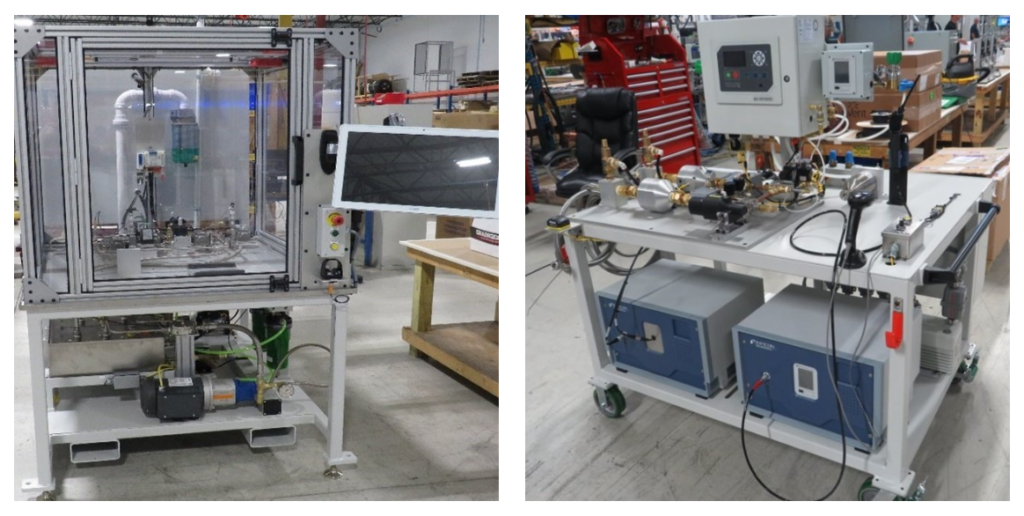
The values should come from your application requirements, not from a generic checklist. A test result is far more useful when you know the test fluid, temperature, setup, and pass criteria. Cold plate suppliers also use laboratory validation to check thermal and hydraulic performance against a design.
Check the path from sample to production
Custom projects often change after the first sample. A port moves. A mounting surface needs adjustment. A test shows that the flow path needs another look. Ask how the manufacturer records those changes and confirms which drawing revision is approved.
Then discuss production: Which operations will the supplier perform? Which will involve outside partners? Who coordinates inspection across those steps? How will the approved sample and test criteria carry into later batches?
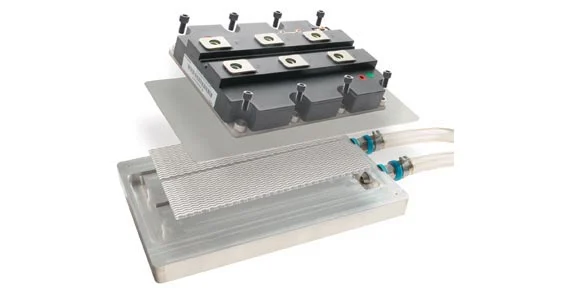
Liquid Cold Plates
The location of each operation matters less than clear responsibility for the finished part. For an overseas buyer, that clarity makes technical reviews and delivery planning much easier. KIMSEN describes machining, tooling, assembly, and inspection capabilities at its Vietnam facility; its published testing page also lists dimensional inspection and thermal evaluation capabilities. Confirm the project-specific test plan during quotation. Thermal Solutions
Send an RFQ that invites a useful answer
A cold plate manufacturer can give a more meaningful response when the RFQ includes both the drawing and its operating context. Along with the 2D and 3D files, share the coolant, thermal targets, pressure and flow requirements, expected quantities, applicable quality requirements, and desired sample schedule.
It also helps to mark what is fixed and what the supplier may propose changing. Perhaps the mounting envelope cannot move, but the internal flow path can. That distinction opens the door to practical feedback without creating confusion about the design.
When quotes arrive, compare the proposed construction, assumptions, tests, tooling, and production scope alongside price. If two offers look far apart, their included work may be different.
A manufacturing partner should make the next decision clearer
The strongest supplier discussion leaves your team with a clearer drawing, a defined test plan, and a realistic production route. That is the standard to use when choosing a custom cold plate manufacturer.
If you are developing an aluminum liquid cold plate, explore KIMSEN Thermal’s cold plate solutions and share your drawing and operating requirements for a manufacturing feasibility review.