Aluminum heatsinks are the unsung heroes behind the reliable performance of modern electronics. Whether it’s cooling LEDs, industrial drives, or telecom modules, the right aluminum heatsink can mean the difference between stable operation and overheating failure. In 2025, with tighter emissions regulations, evolving trade tariffs, and the push for passive cooling, B2B buyers in the US and EU are moving fast to lock in trusted suppliers. Vietnam’s KIMSEN Industrial Corporation leads the charge, offering certified, precision-crafted cooling aluminum components that meet global quality and cost benchmarks.
Why Aluminum Heatsink Components Are Critical for Thermal Management
How Aluminum Heatsinks Control Heat in Electronics
The core purpose of an aluminum heatsink is to dissipate heat through conduction and convection. The high thermal conductivity of aluminum allows quick heat transfer away from hot components like chips, MOSFETs, and LEDs, extending the lifespan of your products.
Lightweight Cooling Aluminum with High Efficiency
Aluminum is nearly three times lighter than copper, making it ideal for systems where weight matters—like drones, EVs, and rack servers. And despite the lighter mass, its conductivity is sufficient for 90% of applications, especially when paired with smart aluminium heatsink designs.
Types of Aluminum Heatsinks for Industrial and Electronic Cooling
Extruded Aluminum Heatsink Profiles for Versatility
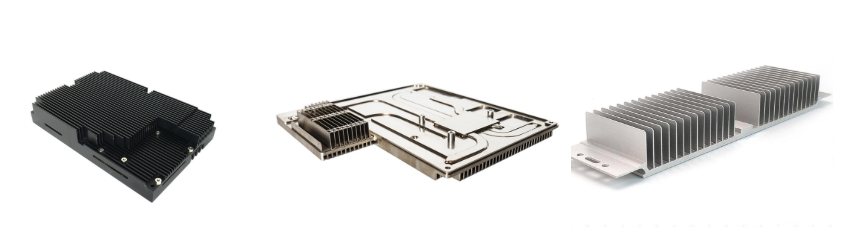
This is the go-to solution for most B2B buyers. Extruded aluminum heatsink profiles are created by pushing molten aluminum through a die to create specific fin shapes and mounting features. They’re ideal for scalable mass production and easy customization.
Skived Fin and Die-Cast Cooling Aluminum Options
Skived fin aluminium heatsinks are made by shaving layers from a solid block—perfect for compact electronics that need dense cooling. Die-cast versions, while heavier, offer structural integrity in outdoor or rugged systems.
Choosing the Right Alloy for Your Aluminium Heatsink Project
6063 and 6061 Aluminum Heatsinks for B2B Applications
6063-T5 is the most common alloy used in aluminum heatsink manufacturing, offering high conductivity, great surface finish, and affordability. 6061-T6, while slightly less conductive, provides additional strength for mounting or impact resistance.
High-Strength Cooling Aluminum Alloys: 7000 and 2000 Series
In high-performance sectors like aerospace or defense, 7000-series aluminium heatsinks (like 7075) may be required. Though costly and harder to extrude, they’re suited for structural applications with thermal loads.
Custom Aluminium Heatsink Designs for B2B Integration
Fin Geometry and Profile Optimization in Extruded Aluminum Heatsinks
Fin height, pitch, and thickness all influence airflow and thermal resistance. Customized aluminum heatsink profiles allow engineers to optimize cooling without sacrificing size or aesthetics.
Anodized Cooling Aluminum with CNC Machined Features
Surface treatments like anodizing not only protect against corrosion—they also increase thermal emissivity. KIMSEN offers black anodized aluminum heatsinks with CNC-milled contact surfaces and built-in mounting slots.
Embedded Mounting Channels and Thermal Interface Grooves
Smart designs include features for direct assembly: screw ports, clip slots, thermal pad grooves. These features reduce labor time and simplify integration for high-volume OEMs.
Key Performance Specs in High-Quality Aluminum Heatsink Systems
Measuring Thermal Resistance in Cooling Aluminum Components
Thermal resistance is the standard metric (°C/W). A well-designed extruded aluminum heatsink may offer resistance as low as 0.5 °C/W under forced convection, while larger passive models range up to 3 °C/W.
Surface Flatness, Weight, and Compatibility
Flatness ensures proper thermal contact; lower weight eases installation; and compliance with common sizes (e.g., TO-220, TO-247) makes deployment faster. Always request drawings and thermal simulation data when sourcing.
Why Vietnam Is a Strategic Hub for Aluminum Heatsink Manufacturing
Vietnam’s Role in Global Cooling Aluminum Supply Chains
With tariffs on Chinese aluminum still active in April 2025, US and EU companies are diversifying. Vietnam is now a preferred location for aluminium heatsink sourcing, thanks to its stable trade relations and skilled manufacturing base.
Cost Advantages and Quality Control from Vietnamese Suppliers
Labor, energy, and logistics costs are lower—especially for sea freight to the EU and East Coast U.S. Combined with solid QA systems, Vietnamese manufacturers provide consistent quality at lower landed cost.
KIMSEN: Vietnam’s Trusted Aluminum Heatsink Manufacturer
Why KIMSEN Leads in Custom Cooling Aluminum Extrusions
Located in Bắc Ninh, KIMSEN Industrial Corporation specializes in high-quality extruded aluminum heatsinks. With in-house CNC, anodizing lines, and ISO/IATF certification, KIMSEN delivers end-to-end solutions.
- ISO 9001:2015 & IATF 16949 certified
- Precision CNC machining & robotic welding
- Surface treatments: matte anodizing, black anodizing, powder coating
- ERP + MES systems for traceability and transparency
Whether you’re designing for LED luminaires, power electronics, or rackmount IT systems, KIMSEN’s heatsinks can be tailored to meet your specs and delivery timelines.
Applications of Aluminium Heatsinks in B2B Markets
LED Lighting and Driver Circuit Cooling
High-power LEDs generate intense heat. Aluminum heatsink solutions for LEDs prevent color shift, burnout, and drop in brightness—especially in outdoor or industrial lighting.
Aluminium Heatsink Designs for Power Electronics
IGBTs, MOSFETs, and switching regulators rely on cooling aluminum extrusions to maintain efficiency and avoid thermal runaway. KIMSEN designs modular heatsinks with scalable footprints.
Server, Telecom, and Medical Systems
Compact servers and routers demand low-profile extruded aluminium heatsinks with high fin densities. In medical imaging, silent passive cooling is essential, where anodized extrusions perform best.
Trends in 2025: Sustainability and Supply Chain Flexibility
Growing Demand for Passive Cooling Aluminum
With rising electricity costs and stricter energy policies in the EU, fanless aluminum heatsink systems are gaining favor. Extrusion-based solutions provide optimal natural convection.
Modular and Stackable Heatsink Profiles
Buyers want heatsinks that fit multiple platforms. KIMSEN supports modular aluminum heatsink development—cut-to-length profiles that adapt to evolving form factors.
Global Events Driving Sourcing Decisions
Ongoing Ukraine conflict and Section 232 tariffs on Chinese metals are reshaping global sourcing. Vietnam’s CPTPP access and EU-Vietnam Free Trade Agreement give it a competitive edge.
Key Takeaways
- The right aluminum heatsink balances thermal performance, cost, and design flexibility.
- Extruded aluminium heatsinks dominate in LED, power electronics, and IT hardware.
- Vietnam offers tariff-free sourcing with high quality—and KIMSEN is the standout manufacturer for B2B projects.
- Alloy selection, fin geometry, and surface treatment all affect efficiency.
- In 2025, modular design, passive cooling, and sustainability are defining heatsink procurement strategies.